Are vitamins important for your daily routine?

To stay healthy, get more out of your day, and age healthily, healthy daily routines are, in our opinion, indispensable. The right vitamins and minerals, in optimal proportions, can give our bodies that little extra boost. In this blog, you'll read about when vitamins should be part of your daily routines.
To stay healthy, get more out of life, and age healthily, healthy daily routines are, in our opinion, indispensable. The right vitamins and minerals, in optimal proportions, can give our bodies that little extra boost. In this blog, you'll read about when and why vitamins should be part of your daily routines.
Why consistently taking vitamins can be relevant
1. It can be an important part of your health goal
We often write about it; health goals and how you can incorporate them into your daily routines. Suitable supplements are, in our opinion, your partner in crime to work towards your health goal. Perhaps you are very sporty or want extra energy to get more out of your day, support your hormone balance, or work towards a robust immune system. For all these health goals, you want to optimally provide your body with the right nutrients.
Of course, you already do a lot by eating healthily, walking outside daily, and working up a sweat regularly. And with the right supplements, you give your body just that extra support to work specifically on your health. As with everything: consistency is key! Just as one workout does not improve your fitness or one ginger shot does not cure your cold, one supplement does not have an immediate effect. So, if you want to tackle a health goal, make vitamins part of your daily routines.
2. It takes time for your body to replenish reserves
If you've done a test and found that you have an insufficient level of certain vitamins or minerals, it's important to ensure you get these nutrients sufficiently on a daily basis. This way, you ensure that your reserves can be replenished and not depleted further. Replenishing these reserves can take several weeks or even months with consistent intake.
In addition to eating healthily and varied, high-quality supplements can support you in getting your reserves back to the right level. For personal advice from our health coaches, you are always welcome in our stores, or you can ask your question via the chat on this website.
3. The nutritional value of our fruits and vegetables is not what it used to be
Even if you eat healthily and consume a lot of fruits and vegetables, chances are that your food comes from depleted soils and thus hasn't been able to absorb optimal nutrients. Intensive farming, monoculture (growing the same crop repeatedly on the same land), and the use of fertilisers deplete the soil of nutrients.
For instance, vitamin C, zinc, iron, copper, and manganese have significantly decreased over the past decades. Did you know that we now need to eat about eight oranges to get the same nutritional value that our grandmothers got from eating just one? To still provide your body with sufficient nutrients daily — alongside a varied and healthy diet — a high-quality multivitamin can support this.
4. Busy, busy, busy?
If you find that your days are (over)full due to a demanding job, a rich social life, family, or school, this can make you feel like you're constantly 'on'. This continuous strain demands a lot from your body, increasing your need for certain nutrients, such as vitamin C and magnesium. When going through a busy period, it can help to support your body by taking good care of yourself and taking suitable supplements daily.
5. You're pregnant (congratulations!)
Being pregnant can rightly be called a high-performance sport. The growth and development of a baby demand a lot from the female body. All the nutrients your growing baby needs, it will get. If necessary, your reserves will be tapped into. Therefore, it is very important that you, as an expectant mother, take extra good care of yourself. You already do this by eating healthily, staying active, and getting rest. Additionally, it's recommended to get more of certain nutrients than when you're not pregnant. The vitamins, minerals, and essential fats you can use extra during pregnancy can be supplemented with a good pregnancy multi and an omega-3 supplement.
Do I need to take my vitamins at the same time every day?
For most supplements, the timing of intake doesn't make a significant difference. However, certain vitamins and minerals function better when taken around a meal or on an empty stomach:
- Water-soluble vitamins are vitamins that only need water to be properly absorbed by your body. There are 9 water-soluble vitamins: vitamin C and the 8 B vitamins. The timing of taking these vitamins doesn't matter much, although B vitamins do support energy levels. You might consider taking them in the morning or early afternoon.
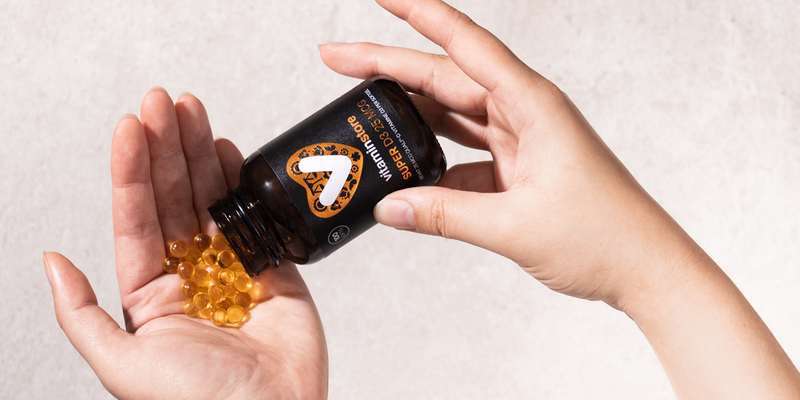
- Fat-soluble vitamins are vitamins A, D, E, and K and are best absorbed when taken with a bit of fat. Therefore, we advise taking these at lunch, as it often contains some fat.
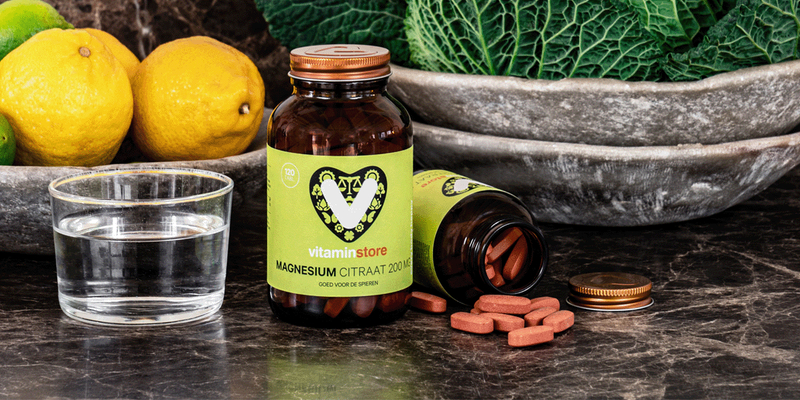
- Minerals are generally water-soluble but are better absorbed with a bit of fat. Magnesium is an exception; magnesium is a basic (alkaline) mineral. When you take magnesium, it temporarily makes your stomach less acidic. A less acidic stomach can slow down the digestion of food — especially proteins. Therefore, it's better to take magnesium between meals and preferably in the evening. It's necessary for energy production, our nervous system, and helps reduce muscle tension.
Good to know: the least ideal time to take your supplements — especially minerals — is with a meal rich in grains (like bread) or washing them down with a sip of coffee. Both grains and coffee are rich in phytic acid. Phytic acid is a substance that binds minerals, making the molecule larger and thus making mineral absorption more difficult.
Do you prefer to take supplements with or after breakfast? You can reduce the phytic acid content in foods by soaking, fermenting, or sprouting them. Overnight oats or sourdough bread are excellent alternatives.
How to make taking supplements unforgettable
- Make it a habit to take your supplement at the same time every day, for example, by setting a reminder on your phone. Over time, you'll find it becomes a fixed part of your morning or evening routine.
- Place your supplements somewhere visible. For example, on your desk, next to your toothbrush, or in your kitchen by the coffee machine or kettle.
- Prepare them the night before for the next morning.
Curious if your vitamin routine still aligns with your health goal(s)? Our health coaches are ready to provide you with comprehensive personal advice in our stores. Prefer to ask your question online? You can do so via the chat on this website.
Sources
- Davis, D. R. (2009). Declining fruit and vegetable nutrient composition: What is the evidence?. HortScience, 44(1), 15-19.
- Scheer, R., & Moss, D. (2011). Dirt poor: Have fruits and vegetables become less nutritious. Scientific American, 27.
- Pickering, G., Mazur, A., Trousselard, M., Bienkowski, P., Yaltsewa, N., Amessou, M., Noah, L., & Pouteau, E. (2020). Magnesium Status and Stress: The Vicious Circle Concept Revisited. Nutrients, 12(12), 3672.