How to recognise too much vitamin D

Can you produce too much vitamin D when you’re out in the sun? And what about supplements you might use when there’s less sunshine? What happens if you get too much of it?
Vitamin D is a well-known vitamin for most of us. Our bodies produce this vitamin when our bare skin is exposed to sunlight. The question is whether you can produce too much vitamin D when you’re in the sun. And what about supplements you might use when there’s less sunshine? What happens if you take too much?
In this blog, you’ll learn how to recognise an excess of vitamin D and what you can do about it.
Can you get too much vitamin D?
Vitamin D is a fat-soluble vitamin. This means the body stores excess amounts rather than excreting them. In other words, you build up a reserve. This also applies to vitamins A, E and K. Other vitamins—such as vitamin C and B12—are water-soluble, and your body does excrete them once you’ve absorbed enough. You pass these excess amounts in your urine.1,2
A build-up of fat-soluble vitamins such as vitamin D can be harmful. So it is possible to get too much vitamin D, and this mainly happens with excessive supplement use.
Read more here about which form of vitamin D is best absorbed.
Too much vitamin D from the sun
It’s almost impossible to get too much vitamin D through sun exposure. Our bodies are uniquely designed and are always seeking balance. When you’re in the sun, your skin regulates the production of vitamin D. After a certain amount, this production stops.3 Here’s how it works:
-
When UVB radiation reaches the skin, a cholesterol derivative called 7-dehydrocholesterol is converted into previtamin D3.
-
Previtamin D3 is then converted into vitamin D3 (cholecalciferol) by the warmth of the skin.
-
After a certain amount of UVB exposure, the 7-dehydrocholesterol in the skin becomes saturated, reducing the production of previtamin D3. This prevents too much vitamin D3 from being produced.
So there’s no need to worry about getting too much vitamin D from the sun. Of course, it’s still wise to avoid prolonged sun exposure without protection from clothing or sunscreen.
Too much vitamin D from food
Vitamin D in food is found mainly in oily fish, liver, and sometimes in fortified foods such as milk and breakfast cereals. It’s good to know that food rarely contributes to an excess of vitamin D. That’s because foods contain only small amounts of vitamin D. For example, anchovies contain 11 mcg per 100 grams and salmon 4.6 mcg per 100 grams.
For adults, the recommended daily amount of vitamin D is between 10–20 mcg, depending on age, sex and specific health needs. The European Food Safety Authority (EFSA) has set the tolerable upper intake level for vitamin D at 100 mcg per day for adults. This means an intake of vitamin D up to 100 mcg per day is considered safe.
To reach 100 mcg of vitamin D, you’d need to eat roughly 2.1 kg of salmon. Even with a diet rich in these foods, it’s very unlikely you would reach the toxic threshold.
Too much vitamin D from supplements
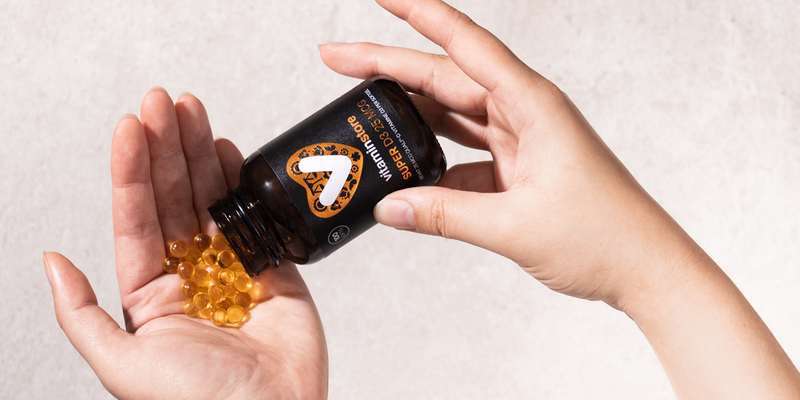
The most common cause of too much vitamin D is excessive use of (high-dose) supplements. Although vitamin D is good for bones and the immune system, an overdose can lead to elevated calcium levels in the blood (hypercalcaemia), which can cause health complaints. This is because vitamin D helps the body absorb calcium from food.
It’s important to emphasise that too much vitamin D is rare. It usually only occurs with very high supplement doses over a longer period. Taking a daily maintenance dose, such as 10 mcg, falls within the recommended amounts for adults. Supplements can be a helpful addition, especially in the winter months or for people who get little exposure to sunlight.

Risk factors for too much vitamin D
Certain groups of people are at higher risk of getting too much vitamin D. This mainly includes people who take high doses of vitamin D supplements without it truly being necessary.
Vitamin K2 is important for bone composition, as vitamin K is involved in directing calcium into the bones. Vitamin D, in turn, contributes to the normal absorption of calcium and increases calcium uptake into the bones. So the balance between vitamin D and K2 is also important.
How to prevent too much vitamin D
Prevention is, of course, the most important thing. Here are a few tips to help prevent you from getting too much vitamin D:
- Check the recommended dosage on the packaging.
- Follow the advice of a qualified professional or dietitian regarding supplement use.
What to do if you’ve had too much vitamin D
If you think you’ve taken too much vitamin D, contact a doctor straight away. The most important and obvious step is to stop taking vitamin D supplements immediately.
The importance of balance between vitamins
A good balance between different vitamins and minerals is therefore an important part of the bigger picture. Alongside vitamin D and K2, it’s important to pay attention to your intake of other nutrients too.
Good to know
Too much vitamin D mainly occurs due to excessive supplement use. If you spend a lot of time in the sun, you don’t need to worry about getting too much vitamin D—your body regulates this very well. Do pay attention to the dosage of your supplements and ask a professional for advice. Don’t forget to keep an eye on the balance between vitamin D and K2. Our Health Coaches are ready to give you free personalised advice. Disclaimer: this article is for information purposes only and does not replace medical advice in any way.
Sources
- Nair, R., & Maseeh, A. (2012). Vitamin D: The “sunshine” vitamin. Journal of pharmacology and pharmacotherapeutics, 3(2), 118-126.
- Stevens, S. L. (2021). Fat-soluble vitamins. Nursing Clinics, 56(1), 33-45.
- Knuschke, P. (2021). Sun exposure and vitamin D. Challenges in Sun Protection, 55, 296-315.