Do I Need Supplements? Reasons For and Against

Daily3 consists of 3 supplements that together form the smartest foundation for your health. Multivitamins, magnesium, and omega-3 work together to support your healthy diet with essential vitamins, minerals, and fatty acids. This ensures that you lay a good foundation every day for now and the future. Shall we read on?
Do I Need Supplements?
No, in principle, you don't need supplements, as long as you:
- Eat healthily and varied. Ideally, 400-500 grams of organic vegetables daily, 2 pieces of fruit, enough complete proteins from meat, fish, eggs, and legumes, and as unprocessed as possible;
- Eat oily fish twice a week or ensure you get enough omega-3 fatty acids from other sources (such as hemp seeds);
- Spend at least 30 minutes outside every day;
- Work up a sweat several times a week;
- Take daily time to unwind to limit potential stress.
Can't manage all this? You're not alone! In that case, it's a good idea to support your health with some basic supplements. This way, you can be sure you're laying a good foundation every day for now and the future.
What Do We Mean by Basic Supplements?
When we talk about basic supplements, we mean the daily addition of important nutrients to support your health. You need to think beyond just not getting sick. Optimal health, in our view, is when all functions of the body work at their best, allowing you to get the most out of life with full energy, both now and later.
The Daily3 includes vitamins, minerals, essential fatty acids, and antioxidants that we often don't get enough of through the standard Dutch diet. These 3 basic supplements are intended to support your body – alongside a healthy diet and lifestyle.
There are various reasons why basic supplements are recommended, even if you eat healthily:
- Not everyone gets enough nutrients. Even with a healthy and balanced diet, it can be a challenge to get all the necessary nutrients every day. For instance, you might not eat enough fruit, vegetables, or fish, as only 19% of the Dutch eat the recommended 1-2 pieces of fruit, and 27% eat the recommended 200 grams of vegetables. Additionally, about 30% of the population eats oily fish twice a week, which is important for omega 3 fatty acids (DHA and EPA).
- The nutritional value of fruits and vegetables is lower than it used to be. Due to intensive farming, monoculture (growing the same crops repeatedly on the same land), and the use of artificial fertilisers, our farmland has become significantly depleted over the years. And what isn't in the soil cannot be absorbed by the crops growing on it. This particularly applies to traditional (non-organic) farming; if you choose organic (dynamic), you're already one step ahead.
From orthomolecular medicine, 2 pieces of fruit and at least 400-500 grams of vegetables are recommended daily. You can imagine that to reach that 500 grams, it's important to include some vegetables with every meal. Are you ready for the challenge?
- Always being ‘on’: always having a full schedule or juggling ten balls in the air for a long time increases the need for certain nutrients like magnesium and vitamin C.
- Vegan or vegetarian: not eating animal products increases the risk of not getting enough of the important nutrients found (mainly) in animal products, such as vitamin B12, iron, choline, and omega 3. If this applies to you, supplementing these nutrients might be advisable.
- Toxic influences from the outside. Living in a busy city with lots of traffic, using non-natural cosmetics and cleaning products, or cooking your meal at too high a temperature. These are often the most everyday things that, when added together, can (unnoticeably) affect our health quite a bit.
These toxic influences can cause our bodies to be exposed to free radicals more than normal. Free radicals are oxidised molecules that we get from the above factors, but they also occur in certain processes in our bodies. Free radicals can be harmful to our cells, tissues, and DNA but are neutralised by antioxidants. This makes getting enough antioxidants like vitamins C and E extra important.
Daily3 - The Smartest Foundation for Your Health
Health is, of course, very personal, and not everyone has the same needs when it comes to health. One person might work up a sweat in the gym five days a week, while another has just become a mother. Both situations demand a lot from the body but also require different forms of support. However, we believe these three supplements can be relevant support for everyone: a multivitamin, magnesium, and omega-3. This way, you lay the best foundation for your health!
1. Multivitamin: All Essential Vitamins and Minerals in One
In our opinion, the basis of any vitamin routine is a quality multivitamin. A multivitamin combines a large number of important nutrients. Taking a multi daily ensures you get all the essential vitamins and minerals as a supplement to your diet.
A good multivitamin also contains easily absorbable forms of vitamins and minerals and additional nutrients like antioxidants and herbal extracts that enhance the effect of the vitamins and minerals. Want to read more about this? Be sure to check out our knowledge base on multivitamins.
A good multivitamin is tailored to gender, life stage, and lifestyle. Simply because, as a woman, man, or athlete, you have different needs. A specific multi supports you exactly where you can use it (extra).
2. Magnesium: For Energy, Muscles, and Relaxation
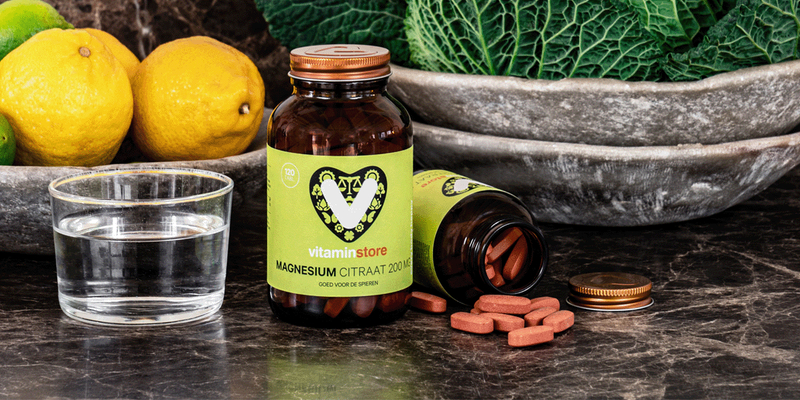
Magnesium plays a role in more than 300 processes in our body and is also called the ‘anti-stress mineral’. Furthermore, magnesium is good for muscles, bones, and the nervous system. It also contributes to learning ability, memory, and energy levels.
Since we cannot produce magnesium ourselves, we have to get this all-rounder entirely from our diet. When you deal with (over)full schedules and juggle many balls daily, you use more magnesium. This higher need makes it harder to get enough through your diet. In our view, magnesium belongs in everyone's kitchen cupboard as a supplement to your diet.
In our knowledge base on magnesium, you can read more about what the mineral is exactly, which forms are easily absorbable, and what it is good for.
3. Omega-3: For Your Brain, Heart, and Eyes*
The omega 3 fatty acids DHA and EPA are good for the heart, blood pressure, and contribute to a healthy blood fat level. DHA is also good for brain function and vision.
We also call omega-3 fatty acids essential fatty acids, which means our body cannot produce them itself, and we must get them entirely from our diet. If you don't eat oily fish (out of principle or because you don't like it) or if it's not on your plate twice a week, there's a good chance you're not getting enough omega-3.
In our knowledge base on omega 3, you can read more about what it is exactly and what forms there are.
*With a daily intake of 250 mg DHA and EPA.
Eating Healthily and Taking Care of Yourself Comes First
Supplements can never replace a varied diet and healthy lifestyle. So it's not the case that healthy, unprocessed food is no longer important when you take supplements. But dietary supplements can give your body just that extra support. In our view, Vitaminstore's Daily3 is a valuable addition for most people.
Sources
- Schuurman, R. W. C., Beukers, M. H., & Van Rossum, C. T. M. (2020). Does the Netherlands Eat and Drink According to the Guidelines of the Food Pyramid?: Results of the Food Consumption Survey 2012-2016.
- Janciauskiene S. (2020). The Beneficial Effects of Antioxidants in Health And Diseases. Chronic obstructive pulmonary diseases (Miami, Fla.), 7(3), 182–202. https://doi.org/10.15326/jcopdf.7.3.2019.0152